Elec Ski V4 System Testing
Following the completion of V3 testing in July 2025, it became clear that a substantial redesign of the system was required. While the modular track improvements introduced in V3 performed well, the motor speed was not sufficient for realistic ski touring use.This marked the start of a major redevelopment phase that ultimately led to the V4 system.
Major Improvements Introduced in V4
The V4 redesign took approximately five months of continuous development and resulted in a complete internal overhaul of the product.One of the most significant changes was the introduction of a new motor. This motor required a different communication protocol, moving from the previous PWM setup to a CAN based system. While this change required additional hardware development and added complexity, it was a deliberate and forward looking decision. CAN is widely used across motors and motor controllers, providing significantly better long term upgradability and flexibility.Although painful in the short term, this change was necessary to support future development and performance scaling.
Weight Reduction and Internal Redesign
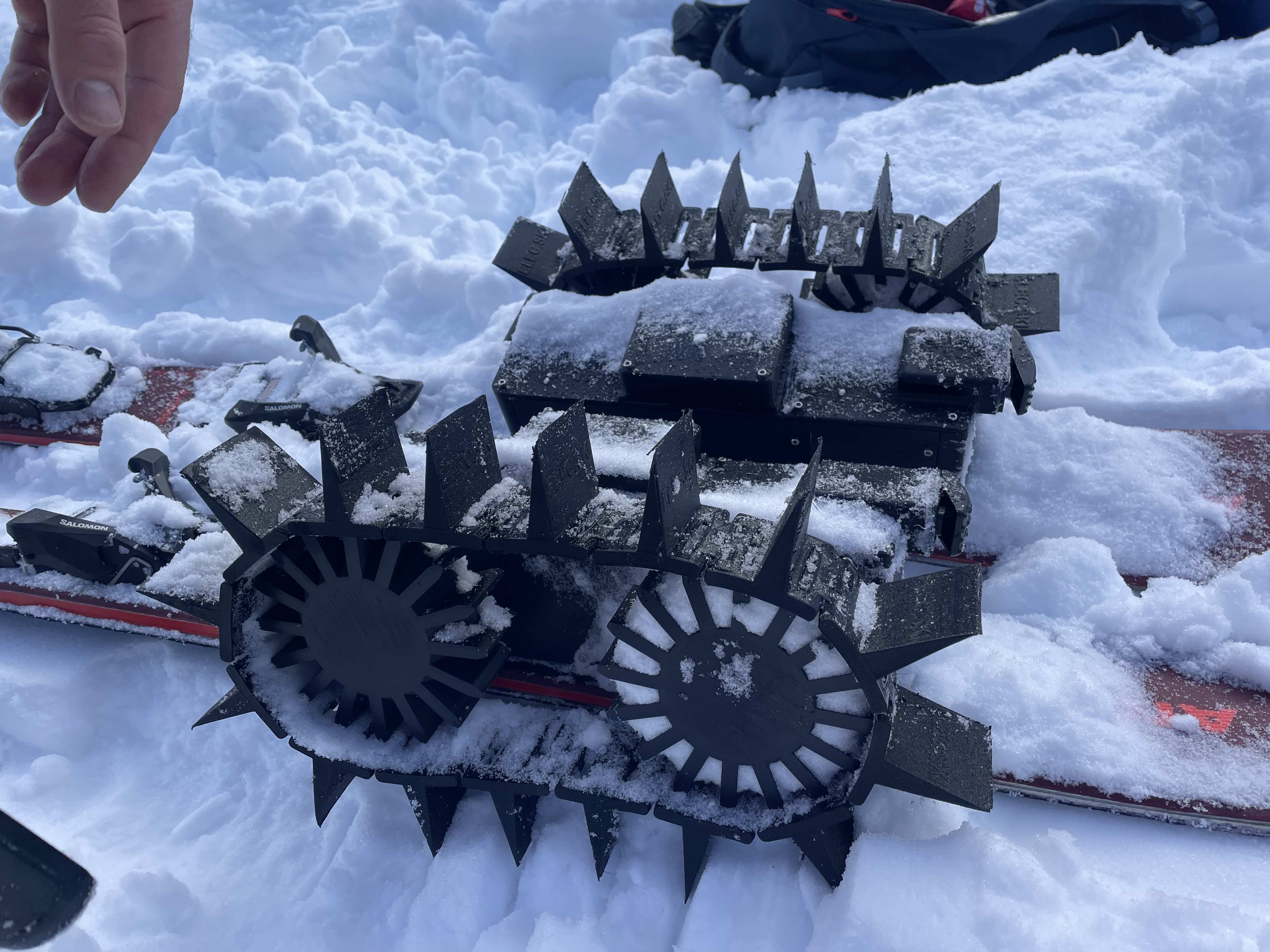
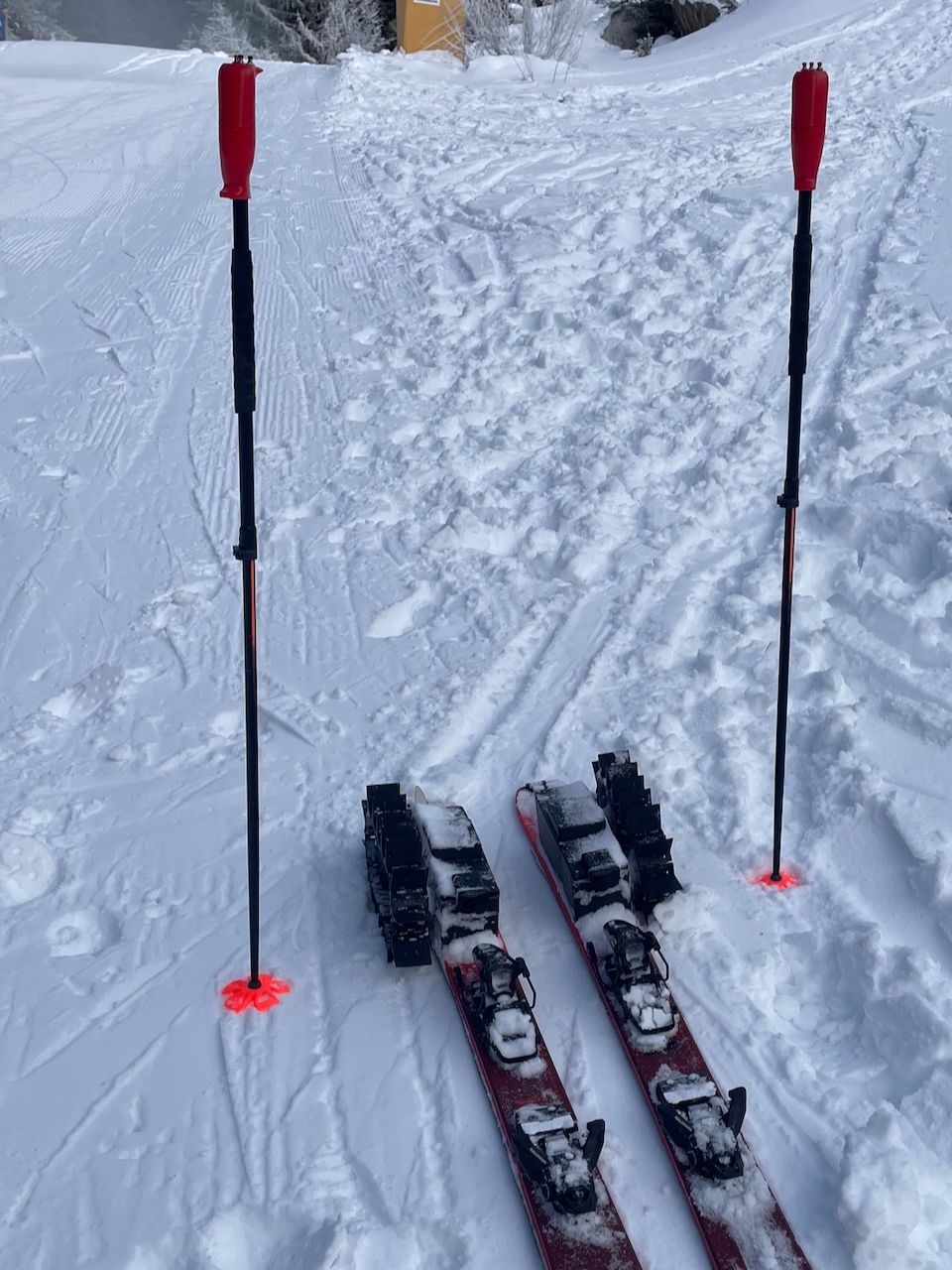
The new motor, combined with further internal optimisation, resulted in a major reduction in system weight. Each leg was reduced from 4.4kg to 2.4kg, a weight saving of approximately 45%.The slimmer motor profile also allowed the enclosure to be redesigned into a much thinner form factor. This removed the need for the previous red side sections and resulted in a cleaner, more compact design.Due to the higher performance motor operating closer to its limits, additional space was required for power regulation and protection. This led to the addition of a small upper compartment to house power regulation components. While this could be integrated into the main enclosure in future iterations, the decision was made to retain this separate compartment for V4 in order to maintain development momentum within the five month timeframe.
Drivetrain and Belt Refinements
The motor change required a revised gear ratio, which in turn led to refinements in the belt and gear system.With the refined gear ratio and new motor layout, the modular belt design was simplified so that all 16 belt segments are now identical. This replaces the V3 configuration, which required 15 standard segments and one unique joining segment. The result is a simpler, more robust system with reduced manufacturing and tooling complexity.The spacing and length of the drive belt were also updated to suit the new configuration, improving overall belt behaviour under load.
Performance Improvements
The higher speed motor delivered a substantial performance improvement. In V3, the top assisted speed was approximately 1 mph. With V4, the system can now exceed 4 mph, bringing it much closer to typical ski touring speeds.The system retains the large format power button at the front of the unit, allowing it to be easily operated using ski poles, even in cold conditions or while wearing gloves.
V4 Testing in Tignes and Bansko
Initial V4 testing took place in Tignes in early December 2025. During this phase, a suspension issue was identified, where the suspension system snapped under load. This was addressed through material changes and manufacturing refinement before further testing.
Subsequent testing took place in Bansko, Bulgaria.Testing in Bansko involved skiing downhill with the system carried in a backpack, followed by skinning short uphill sections using the electric assist system. The reduced weight of the V4 system was immediately noticeable and made downhill skiing significantly easier and more comfortable.
Real World Behaviour and Validation
As shown in the testing footage below, the motor upgrade delivered one of the most important functional improvements to date. The system can now freewheel, allowing the skis to glide naturally while skinning.This creates a glide characteristic similar to what is normally only experienced on slight downhill sections during ski touring. The goal is for this smooth glide to be present throughout the ascent, reducing fatigue and improving efficiency.
Overall, the V4 testing phase was highly successful. One remaining issue was identified with the custom motor drive shaft, which was not sufficiently strong for the new shaftless motor configuration and failed towards the end of testing. This issue has since been addressed in the subsequent V4.5 iteration.
Conclusion and Outlook
The combined results from testing in Tignes and Bansko represent a major step forward for Elec Ski. Compared to the V1 prototype tested in Tignes just one year earlier, the system has progressed significantly in terms of weight, performance, usability, and overall maturity.With suspension sticking resolved, motor speed issues fixed, power regulation improved, and freewheeling behaviour achieved, the V4 system brings Elec Ski much closer to a practical, bolt on electric ski touring solution.
While further optimisation continues, particularly around drivetrain robustness and belt segment design, the direction is clear and the promise of electric assisted ski touring continues to strengthen.