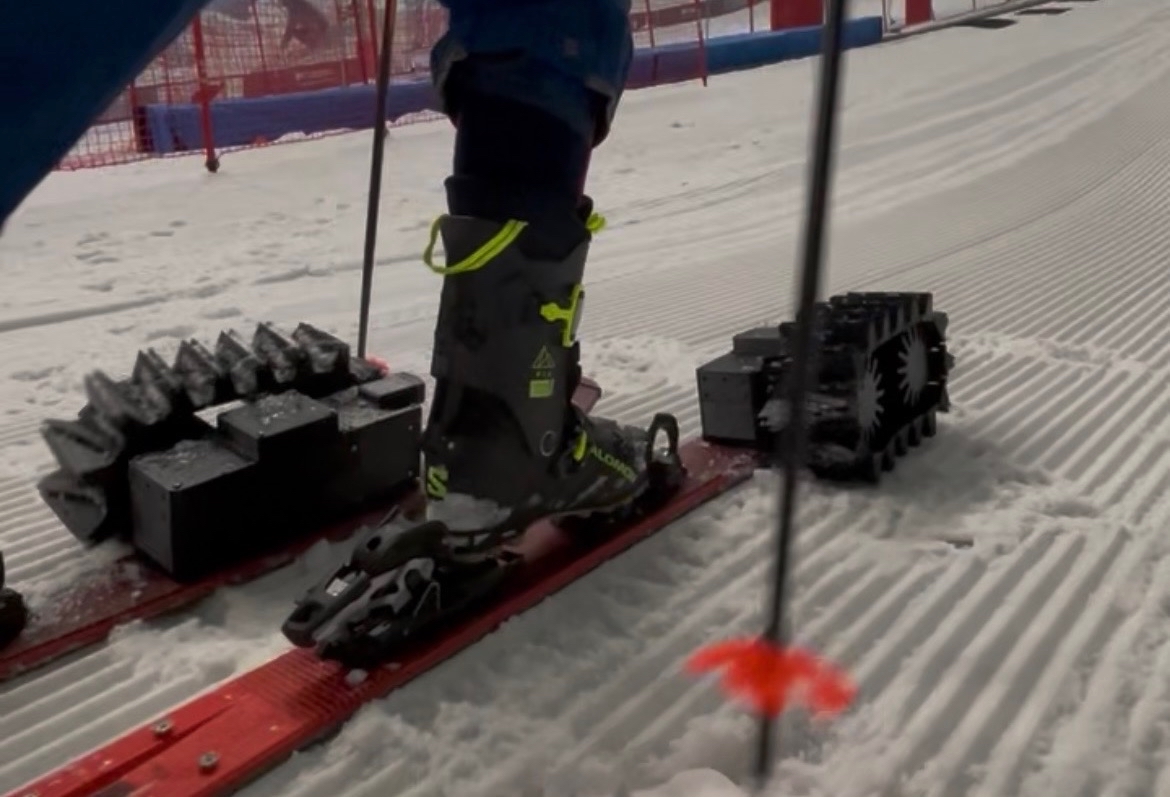
Elec Ski V4.6 System Testing
Following V4.5 testing at the SnowDome in February, two main areas for improvement were identified. The first was the need to increase traction further. The second was to reduce the unwanted sideways force created by the position of the units on the skis.
Because Elec Ski is designed as a bolt-on system, the units cannot be mounted directly through the centre line of the ski without either moving them too far forwards or too far backwards. This would place the units in the wrong position to take the most advantage of the weight distribution of the ski tourer. It would also move away from the goal of creating a system that can be attached to existing ski touring skis, or downhill skis with touring bindings, without permanent modification.
V4.6 therefore focused on improving the track design itself. The aim was to increase grip while also changing the direction of drive, so the system pushed the skis forwards rather than creating unwanted sideways movement.
Wider Track Design
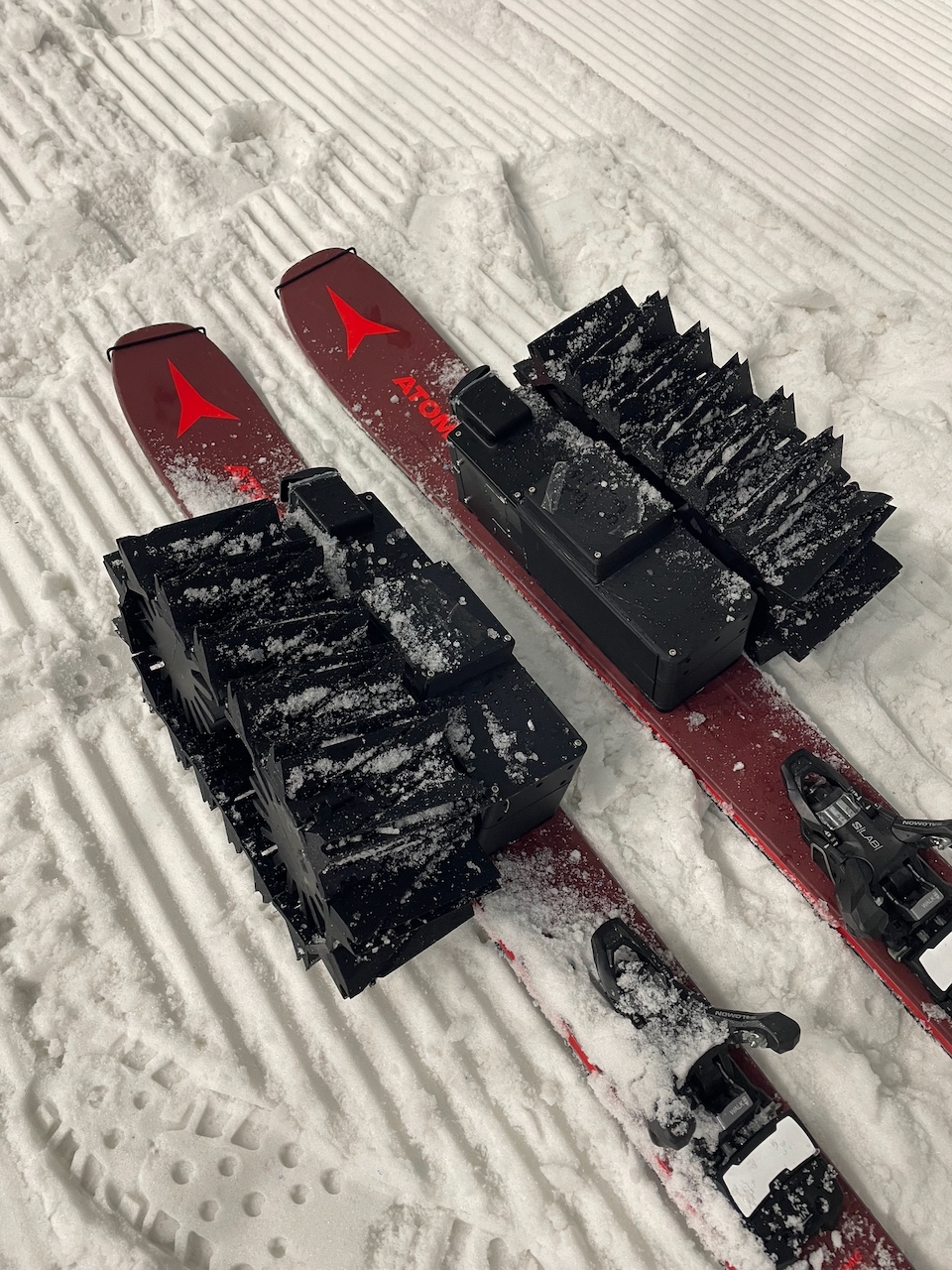
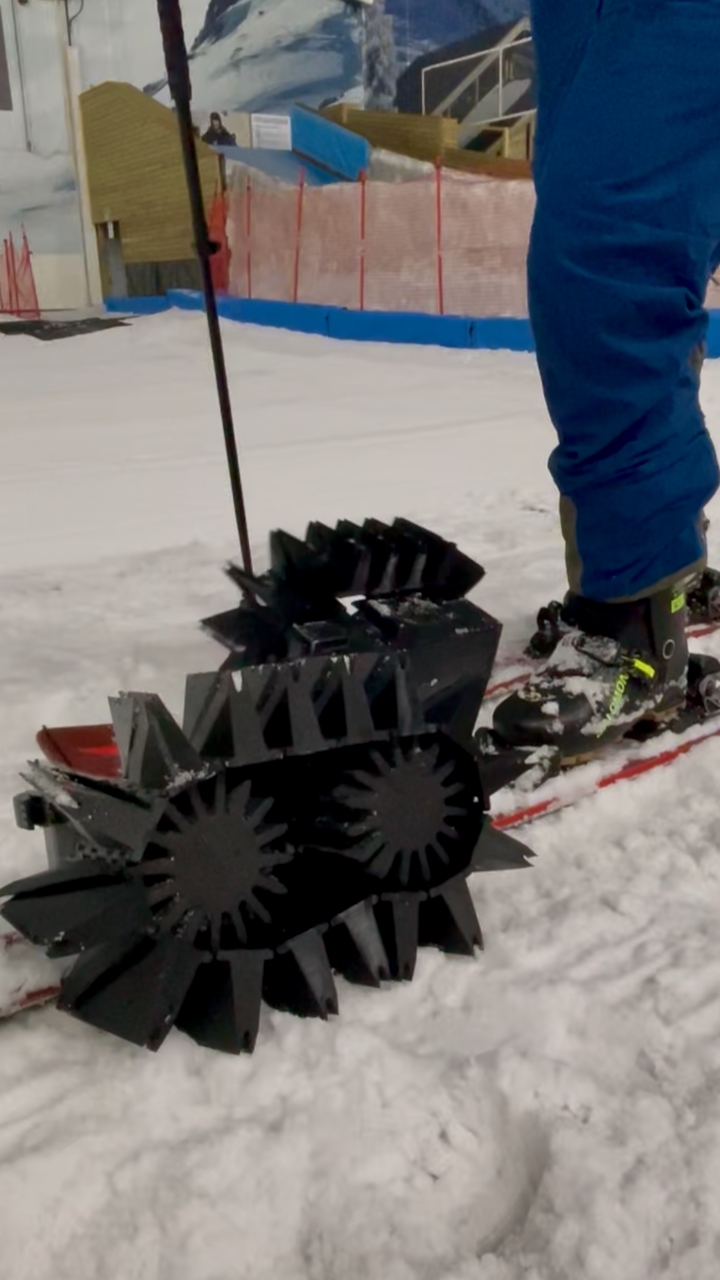
One of the biggest changes in V4.6 was increasing the width of the tracks. The track width was doubled compared to the previous design, significantly increasing the contact area between the belt and the snow.
This did add some weight to the system, but the improvement in traction was immediately noticeable. With twice the effective belt width, the system was able to transfer much more drive force into the snow.
To support the wider tracks, the drive gears were also redesigned. These were updated to accommodate the extra belt width and keep the drivetrain working reliably with the larger track profile.
Angled Chevron Tracks
Following V4.5 testing, the Chevron Belt was selected as the design to continue developing. It had provided the strongest forward propulsion in the SnowDome environment, so V4.6 focused on refining this design further rather than continuing to compare multiple tread patterns.
The main change was to angle the chevron pattern so that each ski used a mirrored belt design. This allowed the tread direction to counteract the offset position of the units and produce a cleaner forward drive.
A second possible solution was considered, which would involve adding a belt on both sides of each ski. This would balance the drive force more directly, but it would also make the stance much wider when ski touring uphill. That would make the system less comfortable to use and less practical for many skiers.
For that reason, V4.6 continued with a single-belt layout, using the track geometry itself to correct the drive direction.
V4.6 Testing
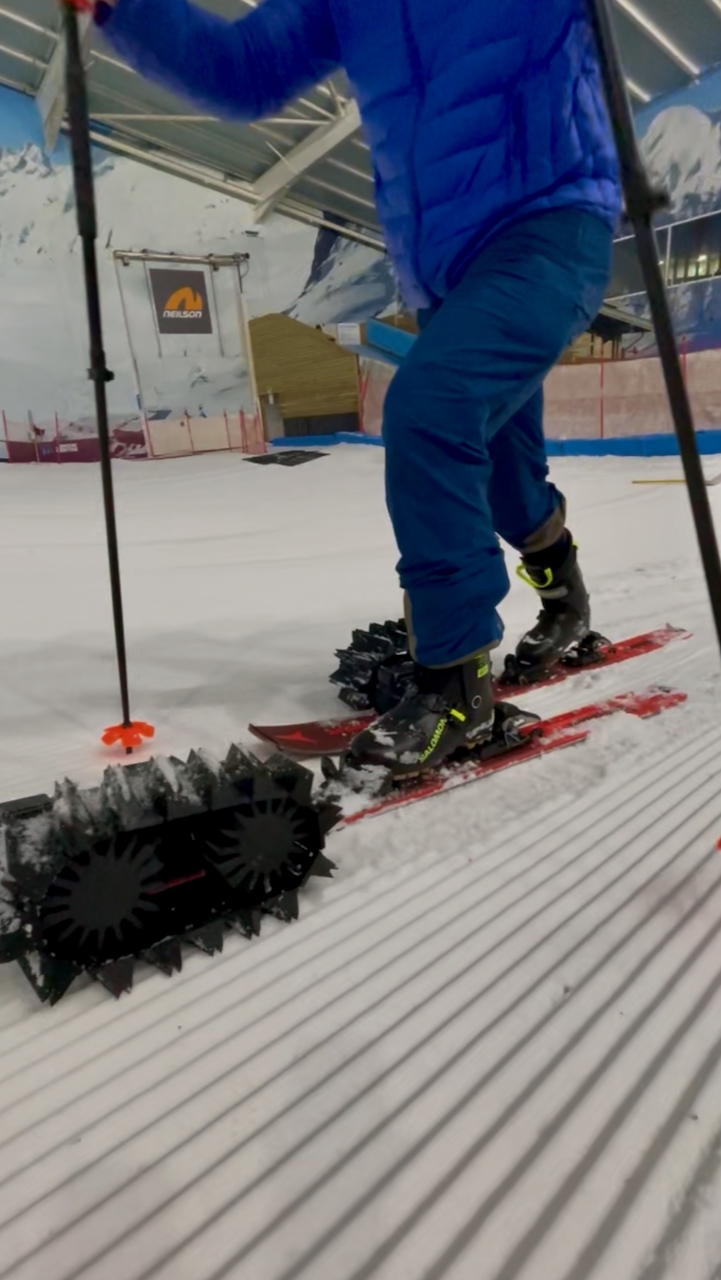
Testing was again carried out at the SnowDome. Because the Chevron Belt concept had already been validated during V4.5 testing, V4.6 testing moved straight onto slope testing rather than repeating the flat ground comparisons.
Two main belt versions were tested. Both used the wider, angled chevron layout, but one version used a more aggressive tread with double-height chevrons. This was tested to see whether increasing the tread height would create even more grip.
The wider standard Chevron Belt performed well. The increase in width provided a clear improvement in drive force, and the angled tread helped reduce the unwanted sideways movement seen in earlier testing.
Mega Belt Testing
The more extreme version, referred to as the Mega Belt, used chevrons that were both double width and double height. This design performed well in terms of traction and provided a strong drive up the slope.
However, it was too aggressive for the current suspension system. The larger tread profile introduced greater sideways loading into the unit, not just vertical loading. Although the suspension had been improved and was smoother than before, it was not able to cope with this more extreme loading case.
After a few successful runs, the base of the system snapped. While this ended the test early, the Mega Belt still provided useful information. It showed that there is further traction potential in more aggressive belt designs, but also confirmed that the suspension and base structure need to be strong enough to handle the extra forces.
Weight Position and Traction
The testing also reinforced the benefit of mounting the units towards the front of the ski. When ski touring uphill, the skier naturally leans forward over the ski. This means more weight is applied through the front section, which helps press the tracks into the snow and increase traction.
This is important because the weight of the system and skier is what allows the belt to grip effectively. Mounting the units closer to where the skier’s weight is naturally applied helps maximise the available traction without needing to modify the ski.
Key Findings
Overall, V4.6 showed a clear improvement in traction and forward drive. Doubling the belt width had a major impact, and angling the chevron pattern helped reduce the unwanted sideways movement around the ski.
The testing also highlighted two key reliability issues. The first was with the Mega Belt, which produced enough traction to overload the current suspension and base structure.
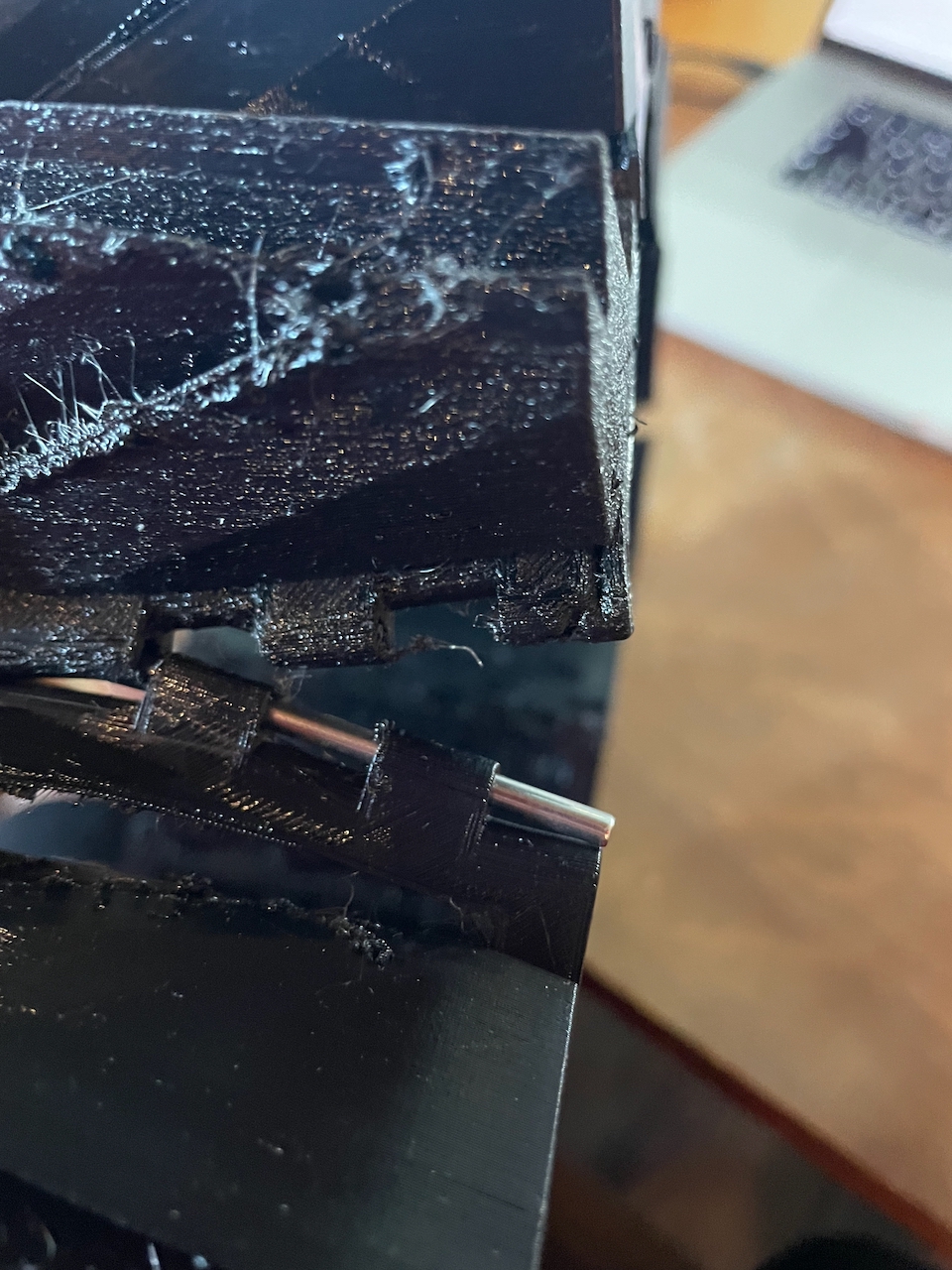
The second was with the belt links, which snapped in certain places during use. This reduced belt tension and allowed the belt to work its way off the drive gears.
These issues were not resolved in V4.6, but they provided clear direction for the next development stage of V4.7.
Conclusion and Outlook
V4.6 was a strong refinement step for Elec Ski. The wider tracks significantly improved traction, and the angled Chevron Belt helped produce a cleaner forward drive.
The Mega Belt showed that more aggressive tread designs can provide even greater grip, but also highlighted the limits of the current suspension and base structure.
The learnings from this testing were then used for V4.7, with the next focus being to strengthen the belt links and reinforce the suspension system so that it could handle the additional forces created by the Mega Belts. This helped prepare the system for the next round of testing in France in mid-April.