Elec Ski V4.5 System Testing
Following V4 testing in Bansko, Bulgaria in January, it became clear that many of the major drivetrain issues had been largely resolved. The motor drive was consistent, the system was delivering a reasonable level of torque, and the overall drivetrain behaviour was much more reliable than in previous iterations.
However, the testing also highlighted that while the modular belt system had improved significantly, the belt design itself still required further optimisation. The existing multi-segment belt was functional, but it was not yet providing enough traction for the system to perform as effectively as required across different snow conditions.
V4.5 was therefore focused on two key areas: improving belt traction and resolving the remaining drive shaft issues identified during V4 testing.
Drive Shaft Improvements
One of the smaller but important updates in V4.5 was to the custom drive shaft. The system uses a shaft bolted onto the motor to hold the drive gear, but during V4 testing it became clear that this part was not strong enough for the loads being applied.
The shaft was strengthened, and the gear retention issue was also fixed. The drive gears were redesigned as two-piece clamping parts, allowing them to clamp securely onto the shaft and preventing them from working loose during use.
New Belt Designs
The main focus of V4.5 was the development and testing of new belt designs.
From the results of the Bansko testing, three new belt concepts were created, each designed to improve traction in a different way.
M Belt
The M Belt used an M-shaped profile, similar in concept to the tracks found on a snowmobile. The aim was to create a more aggressive tread pattern that could better engage with the snow and improve forward propulsion.
Spoon Belt
The Spoon Belt used a deeper scooped shape designed to catch and move more snow. Serrated edges were also added to help improve grip on harder packed snow, where a smoother tread may struggle to bite effectively.
Chevron Belt
The Chevron Belt used a double-point tread pattern. This design was optimised for groomed trails and hard packed snow, where a more directional tread shape could help generate stronger and more consistent forward drive.
V4.5 Testing
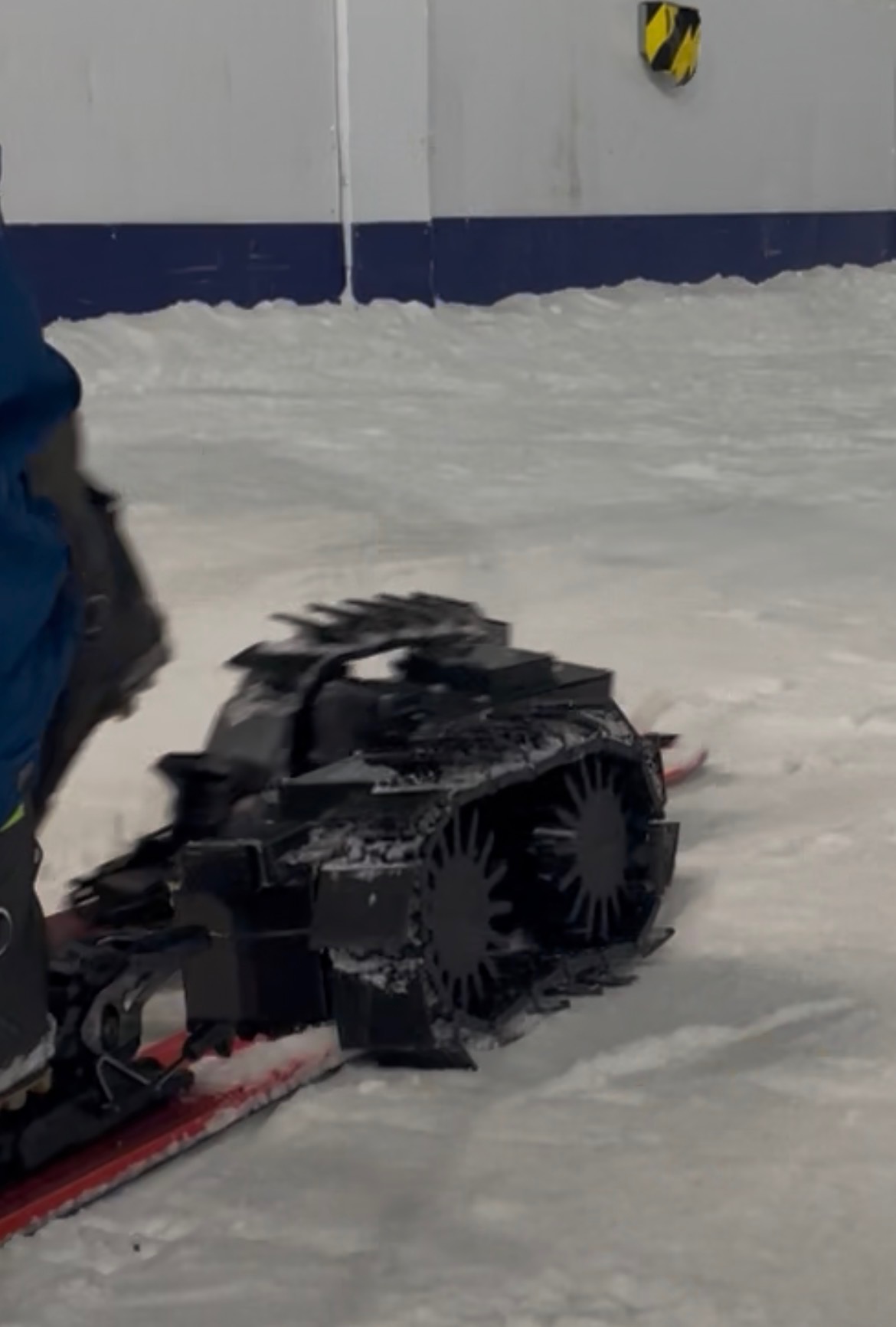
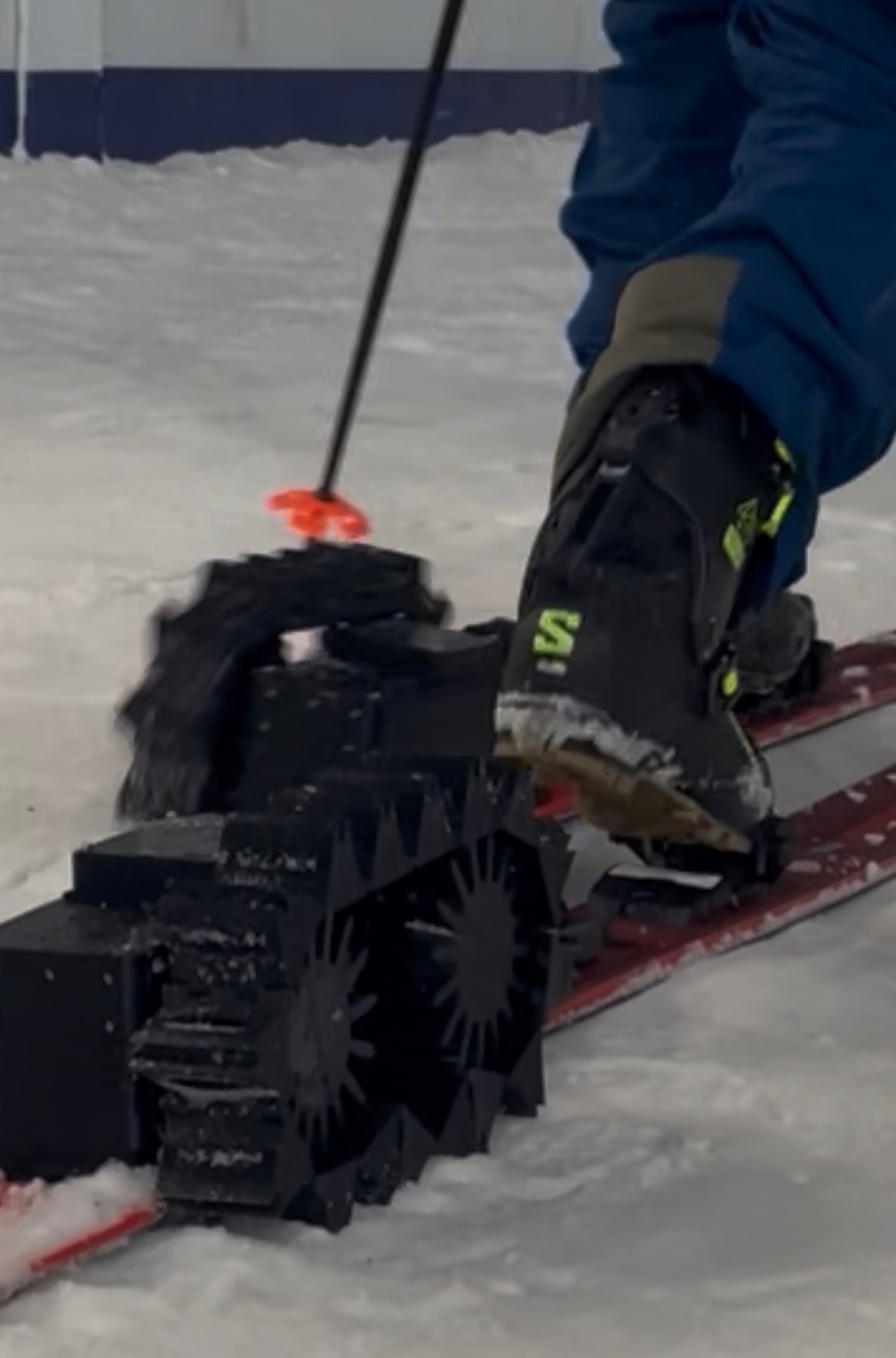
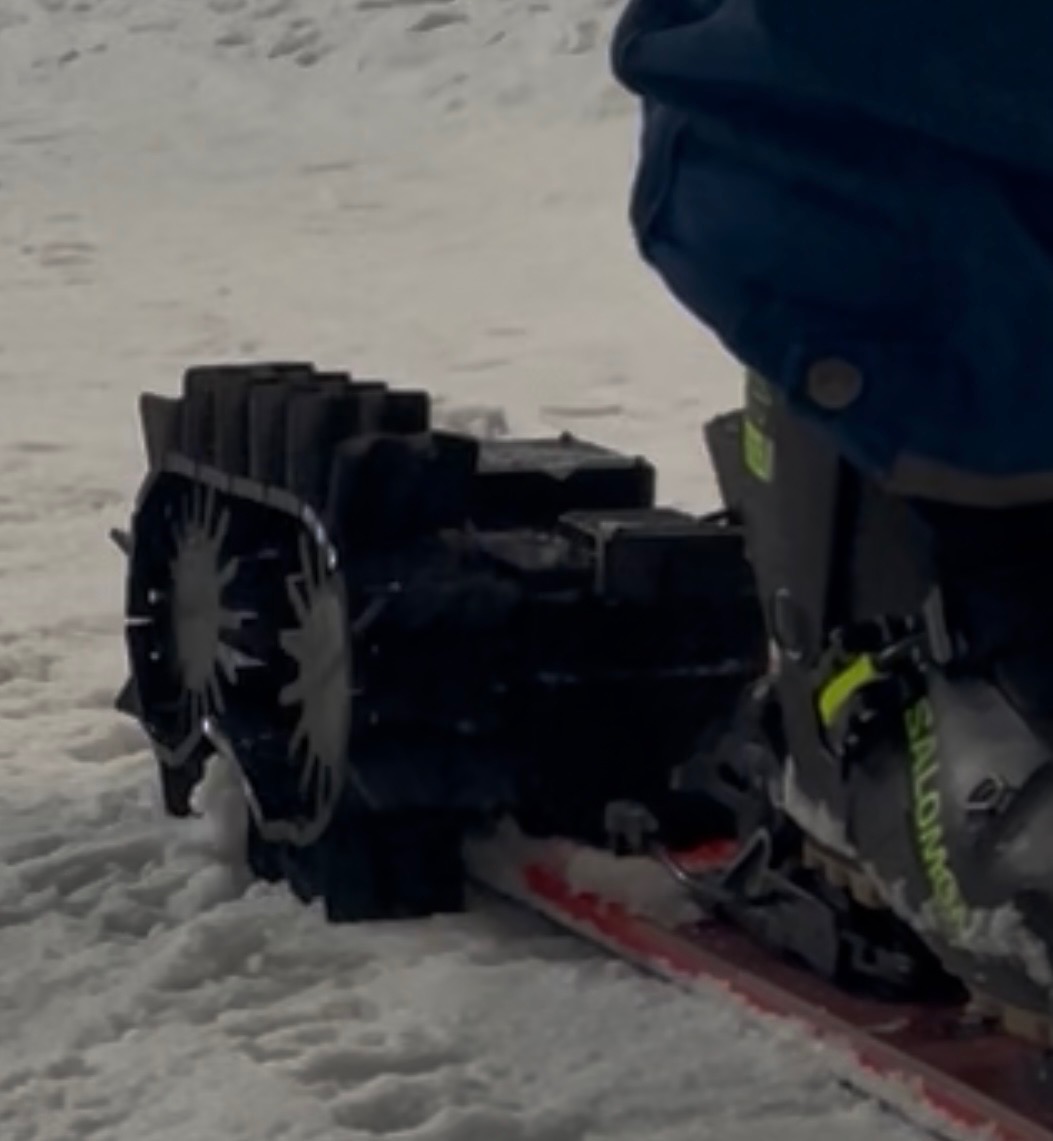
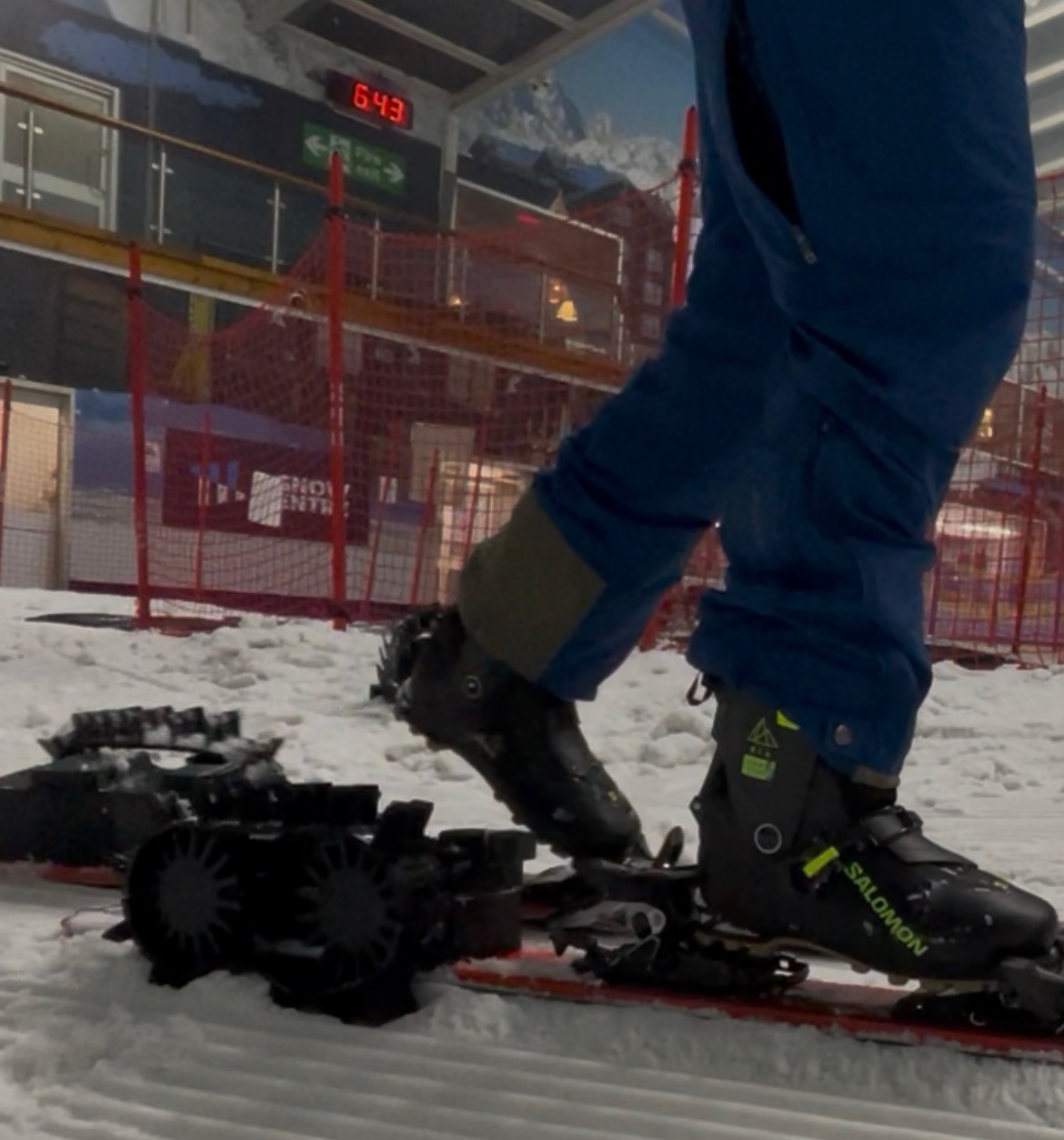
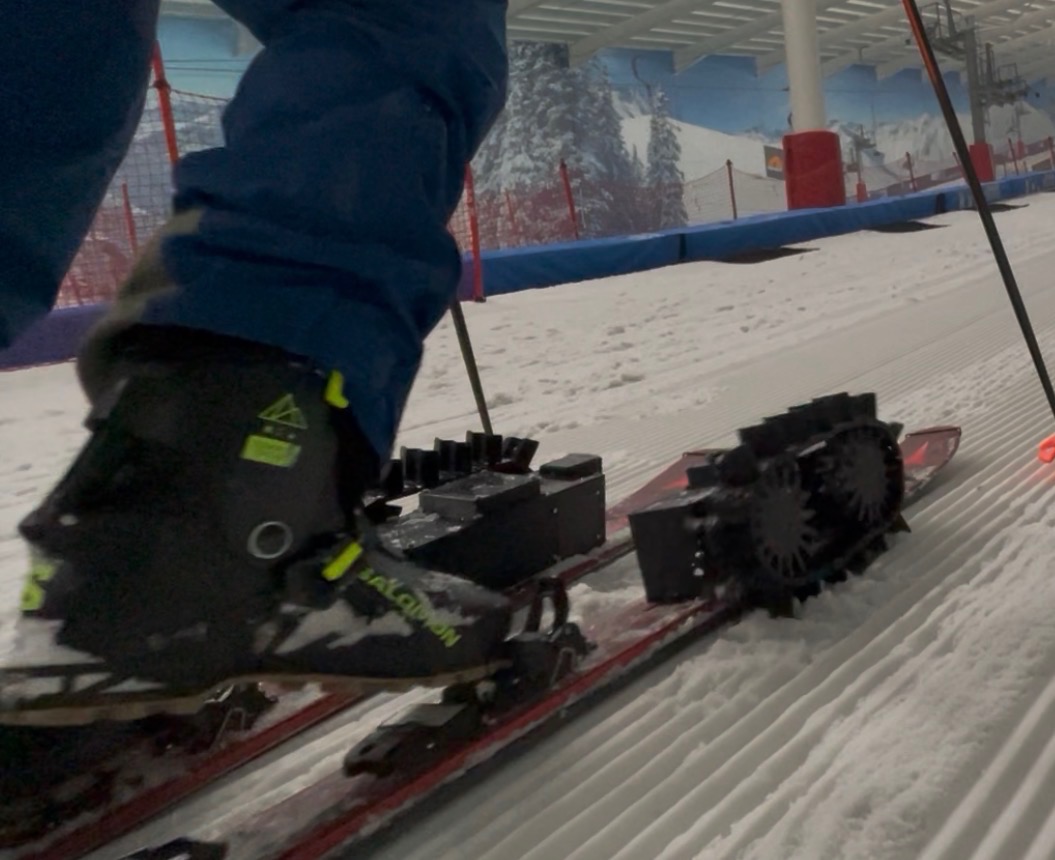
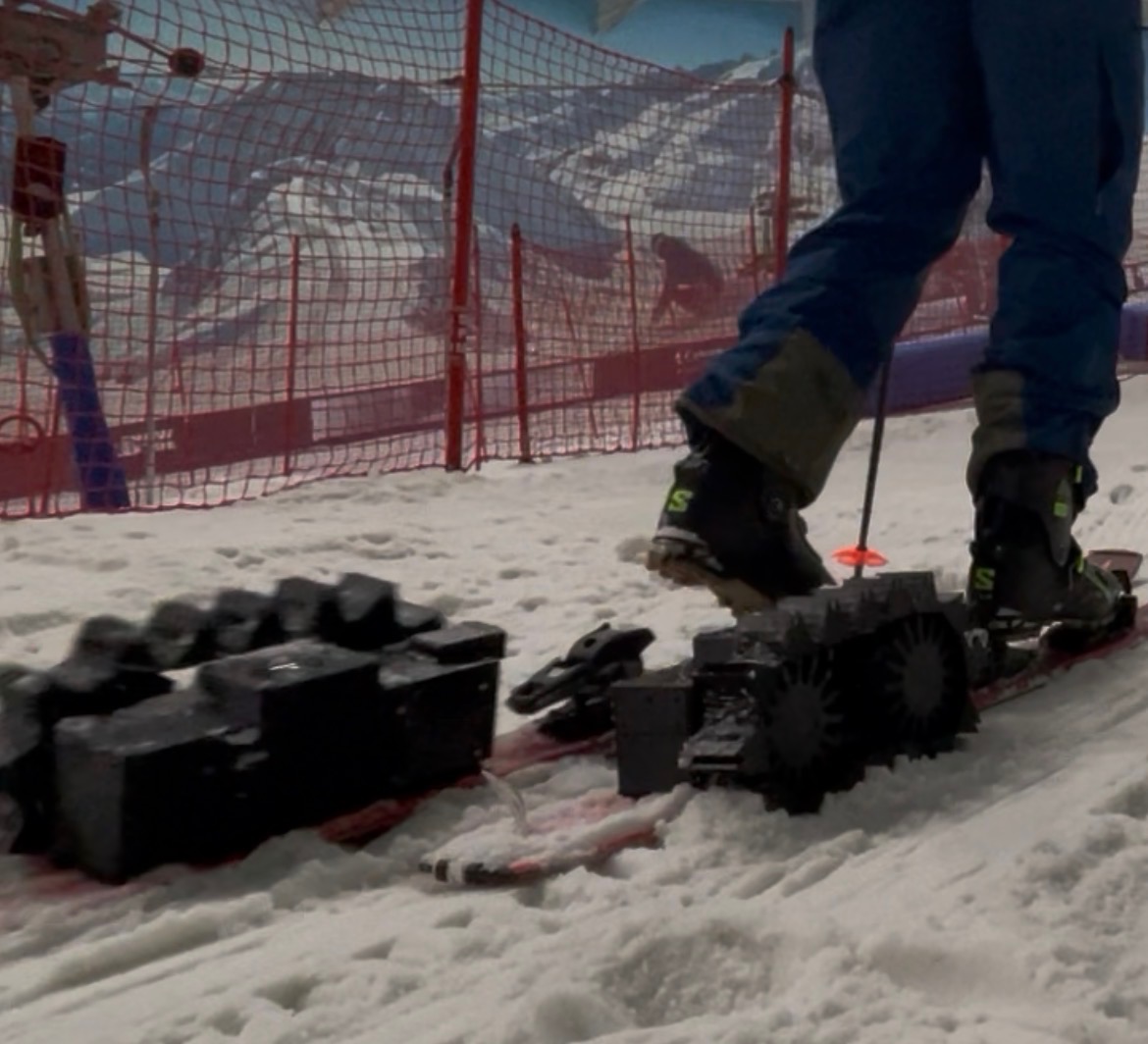
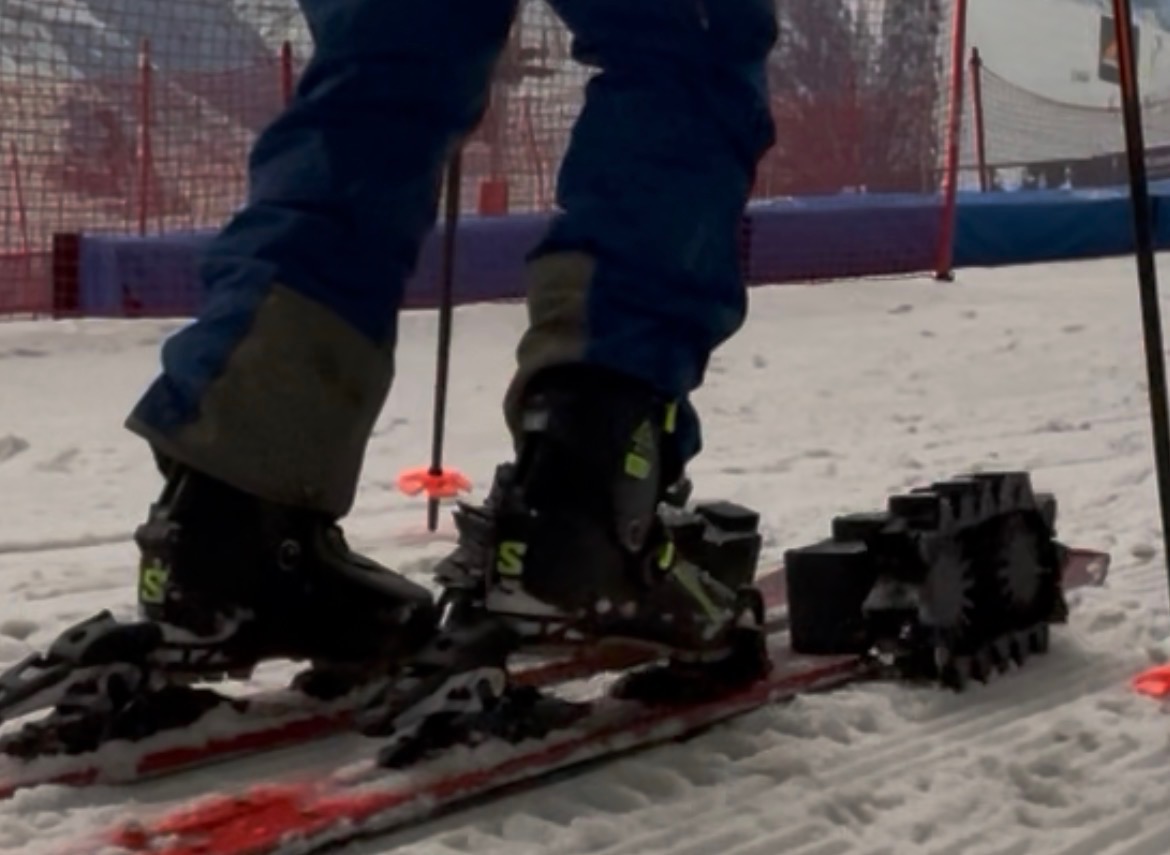
Testing was carried out at the SnowDome, allowing the three belt designs to be compared in a controlled environment.
Each belt was tested on both flat ground and an incline slope. The purpose of this testing was not to fully validate the system across all real-world mountain conditions, but to compare the traction behaviour of each design and identify which tread pattern provided the strongest performance in the available test environment.
All three belts showed an improvement in traction compared to previous designs. This confirmed that belt geometry is a key factor in improving system performance, and that there is still significant room to optimise the track design further.
Of the three concepts, the Chevron Belt provided the strongest forward propulsion during testing. Given that this belt had been specifically designed for groomed trails and hard packed snow, this result made sense within the SnowDome environment.
Key Findings
The V4.5 testing confirmed that traction had improved, but it also highlighted another important system behaviour.
Because the drive force is not applied through the exact centre point of each ski, the system creates a moment around the ski. As the belts generate forward drive, they also create a sideways force that causes the skis to move forwards but also outwards.
This is not ideal, as the goal is for the system to provide clean forward assistance without negatively affecting ski tracking or control.
The improved belt traction made this behaviour more noticeable. While this may seem like a setback, it was actually a useful finding, as it identified the next area of development required to improve the overall system.
Conclusion and Outlook
V4.5 represented an important refinement stage for Elec Ski. The drive shaft was strengthened, gear retention was improved, and three new belt designs were tested.
All three belts improved traction compared to previous designs, with the Chevron Belt providing the strongest forward propulsion in the SnowDome test environment. The testing also highlighted that as traction increases, the moment around the ski becomes a more important issue to solve.
The next step is a V4.6 refinement phase, focused on increasing traction further while reducing the outward movement of the skis.